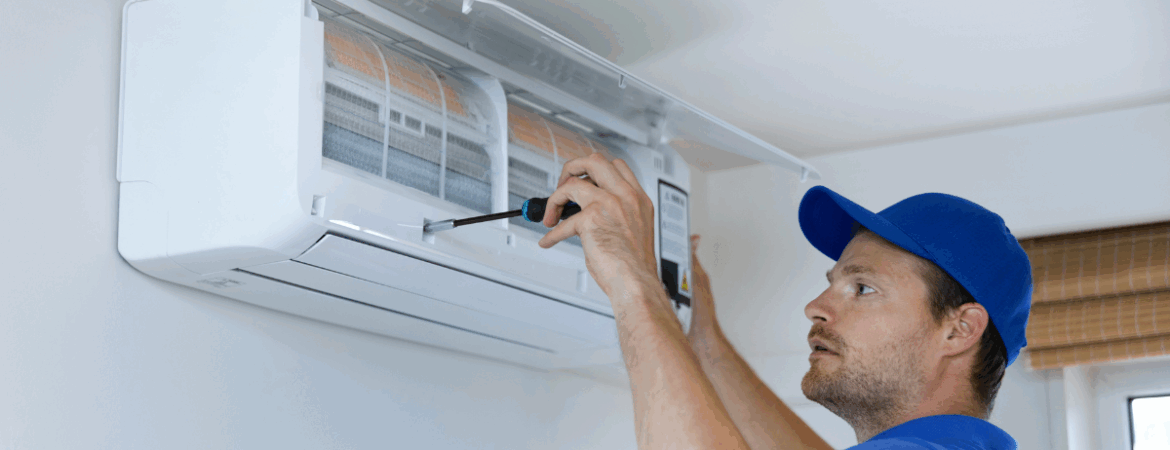
Ductless mini-split systems have become the go-to HVAC solution for New York City apartments, brownstones, and commercial spaces. Their flexibility, energy efficiency, and compact design make them ideal for buildings where traditional ductwork is impractical. However, even the best mini-split system will underperform if it is not installed correctly.
Whether you are a contractor looking to refine your installation technique or a homeowner evaluating a completed job, understanding these seven common installation mistakes can save you thousands of dollars in repairs, wasted energy, and premature system failure.
Mistake #1: Wrong Sizing and BTU Calculation
Why It Matters
Choosing the wrong size mini-split is the single most costly installation mistake. An undersized unit will run constantly, struggling to reach the set temperature, driving up energy bills and wearing out the compressor prematurely. An oversized unit is equally problematic: it short-cycles (turns on and off too frequently), fails to properly dehumidify the air, creates uncomfortable temperature swings, and wastes energy.
In New York City, where apartments vary dramatically in size, ceiling height, window exposure, and insulation quality, a one-size-fits-all approach simply does not work.
How to Avoid It
- Perform a Manual J load calculation for every installation, accounting for square footage, ceiling height, insulation R-value, window area and orientation, number of occupants, and heat-generating appliances
- Factor in NYC-specific conditions: South-facing windows in high-rise buildings can add 20-30% to cooling load; older pre-war buildings with poor insulation need more capacity than modern construction
- General guideline: Plan for approximately 20 BTU per square foot as a starting point, then adjust based on the load calculation
- When in doubt, consult the manufacturer's sizing charts and speak with a technical representative for borderline cases
Mistake #2: Poor Indoor Unit Placement
Why It Matters
The location of the indoor head unit directly affects comfort, efficiency, and aesthetics. Mounting the unit too high on the wall pushes conditioned air above the occupied zone, resulting in uneven temperatures. Placing it behind furniture, curtains, or in a recessed alcove blocks airflow and forces the system to work harder. Installing it directly above a heat source, such as a radiator or electronics, causes the thermostat sensor to read inaccurate temperatures.
How to Avoid It
- Mount the indoor unit 7-8 feet from the floor on a load-bearing wall for optimal air distribution
- Ensure at least 6 inches of clearance above the unit and 4 feet of unobstructed space in front of it
- Avoid placing the unit on exterior walls when possible, as this can reduce efficiency due to thermal transfer
- Position the unit on the longest wall of the room to maximize airflow coverage across the entire space
- Keep the unit away from direct sunlight through windows, which can trick the temperature sensor
Mistake #3: Incorrect Refrigerant Line Routing
Why It Matters
The copper refrigerant lines connecting the indoor and outdoor units are the circulatory system of your mini-split. Lines that are too long reduce system efficiency because the refrigerant loses temperature as it travels. Lines with too many bends create pressure drops that force the compressor to work harder. Improperly insulated lines cause condensation, energy loss, and potential water damage inside walls.
How to Avoid It
- Keep line sets as short as possible while maintaining proper routing; most residential mini-splits perform best with line lengths under 50 feet
- Check the manufacturer's maximum line length for your specific model, as exceeding it requires additional refrigerant charges and may void the warranty
- Minimize bends and use long-radius elbows instead of sharp 90-degree turns; each sharp bend is equivalent to adding several feet of line length
- Insulate both the suction and liquid lines separately with closed-cell foam insulation rated for outdoor UV exposure
- Slope lines slightly toward the outdoor unit to ensure proper oil return to the compressor
Mistake #4: Inadequate Drainage
Why It Matters
Mini-split indoor units produce significant condensate, especially during New York's humid summers. A single unit can generate 1 to 3 gallons of water per day during peak humidity. If the condensate drain line is improperly pitched, too small, or poorly connected, water will back up into the indoor unit, overflow into the wall or ceiling, and potentially cause mold growth, water damage, and even electrical hazards.
We have seen countless service calls in NYC apartments where water dripping from a mini-split was traced back to a simple drainage installation error.
How to Avoid It
- Maintain a minimum 1/4-inch-per-foot downward slope on all condensate drain lines from the indoor unit to the drainage point
- Use rigid PVC pipe (3/4-inch minimum) for horizontal runs instead of the flexible vinyl tubing that comes with some units, which can sag and create traps
- Install a condensate pump when gravity drainage is not possible, such as in basement installations or units mounted below the drainage point
- Include a P-trap or check valve to prevent air from being drawn back into the drain pan, which can cause gurgling noises and drainage issues
- Test the drain line by pouring water into the drain pan during installation to verify proper flow before closing up the wall penetration
Mistake #5: Electrical Issues
Why It Matters
Electrical mistakes during mini-split installation can be dangerous and are among the most common code violations found during inspections. Using the wrong breaker size can cause nuisance tripping or, worse, fail to protect the circuit in an overload situation. Omitting the required outdoor disconnect switch violates NEC code and creates a safety hazard for service technicians. Using undersized wire gauges leads to voltage drops that reduce performance and create fire risks.
How to Avoid It
- Always follow the manufacturer's electrical specifications for wire gauge, breaker size, and fuse ratings, which are printed on the unit's data plate
- Install a dedicated circuit for each mini-split system; never share a circuit with other appliances
- Use the correct breaker size as specified: most 12,000 BTU units require a 20-amp breaker; 24,000+ BTU units typically need 30 amps
- Install an outdoor disconnect switch within sight of the outdoor unit (required by NEC 440.14); this is a non-negotiable safety requirement
- In NYC, ensure all electrical work is performed by a licensed electrician and file for necessary permits with the DOB to avoid fines and ensure insurance coverage
Mistake #6: Skipping the Vacuum and Nitrogen Test
Why It Matters
Before releasing refrigerant into the line set, the system must be thoroughly evacuated of air and moisture using a vacuum pump. Skipping this step or performing it improperly is one of the fastest ways to destroy a new mini-split system. Moisture in the refrigerant lines combines with the refrigerant to form acids that corrode the compressor from the inside out. Air in the system reduces cooling capacity and increases operating pressures, leading to premature compressor failure.
A proper nitrogen pressure test before evacuation also verifies that all connections are leak-free, preventing costly refrigerant loss down the road.
How to Avoid It
- Pressure test the line set with dry nitrogen at 300-400 PSI for at least 15 minutes before evacuation; monitor the gauge for any pressure drop indicating a leak
- Use a quality two-stage vacuum pump and evacuate the system to at least 500 microns (250 microns is ideal)
- Hold the vacuum for 30 minutes minimum after closing the valve; if the micron level rises above 1,000, there is a leak or moisture that must be addressed
- Never use the unit's refrigerant to purge air from the lines; this is wasteful, harmful to the environment, and will not remove moisture
- Use a digital micron gauge instead of relying on the vacuum pump's built-in gauge for accurate readings
Mistake #7: Not Leveling the Outdoor Unit
Why It Matters
The outdoor condenser unit must sit on a level, stable surface. An unlevel outdoor unit causes the compressor to operate under uneven oil distribution, leading to increased wear and potential failure. It also causes vibration noise that transmits through the building structure, which is a common complaint in NYC apartments and townhouses where outdoor units are mounted on walls, rooftops, or narrow side yards.
Additionally, an improperly supported outdoor unit can shift over time due to settling, wind loads, or freeze-thaw cycles, stressing the refrigerant connections and causing leaks.
How to Avoid It
- Use a pre-fabricated condenser pad or concrete pad on ground-level installations, set on compacted gravel for proper drainage
- Verify level in both directions (front-to-back and side-to-side) using a bubble level or digital level
- Elevate the unit 4-6 inches above grade using a mounting stand to prevent snow burial, flooding, and debris accumulation
- For wall-mounted brackets: Use heavy-duty rated brackets anchored into structural members, not just drywall or siding; ensure the bracket is level before securing the unit
- Install vibration isolation pads between the unit and its mounting surface to reduce noise transmission
- Maintain clearance: Leave at least 24 inches of clearance on all sides and 48 inches above the unit for proper airflow and service access
Final Thoughts
A mini-split system is only as good as its installation. By avoiding these seven common mistakes, you can ensure your ductless system operates at peak efficiency, provides consistent comfort, and lasts its full expected lifespan of 15 to 20 years. If you are planning a mini-split installation in the New York City area, our team at 3D HVAC Supplies can help you select the right equipment and connect you with qualified installers who do the job right the first time.
Have questions about mini-split installation or need equipment for an upcoming project? Call us at (718) 359-8888 or visit our Flushing showroom. We stock all major brands including Gree, Daikin, and Mitsubishi with accessories and installation supplies ready for same-day pickup.